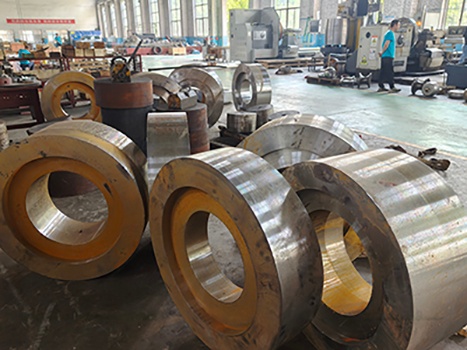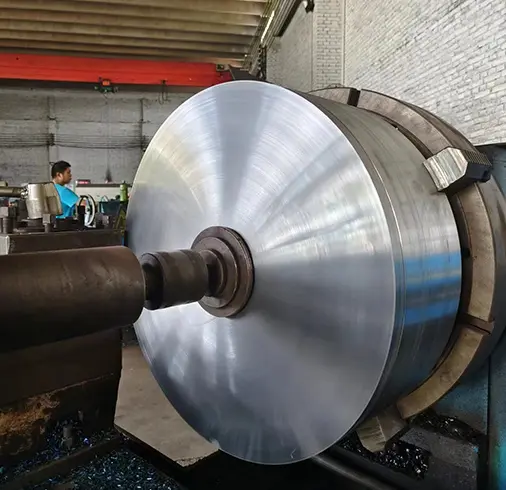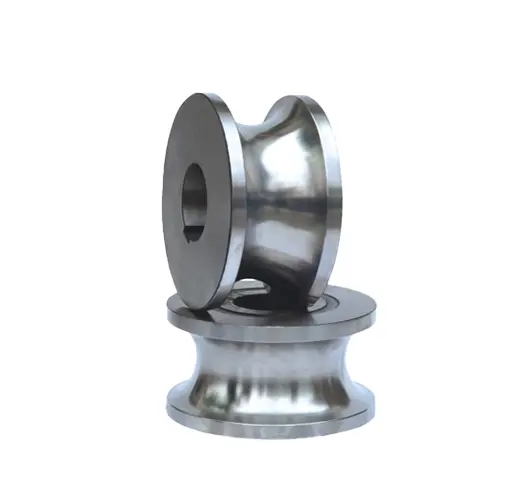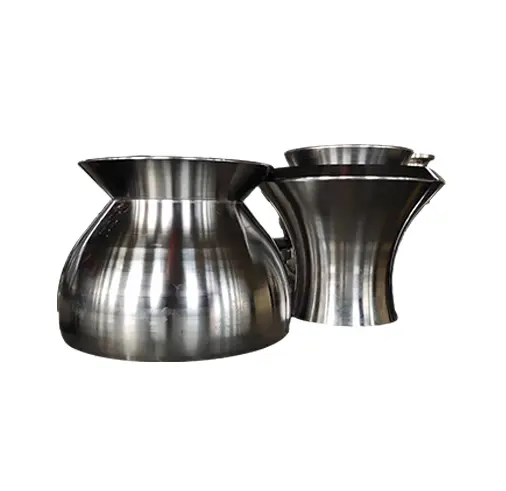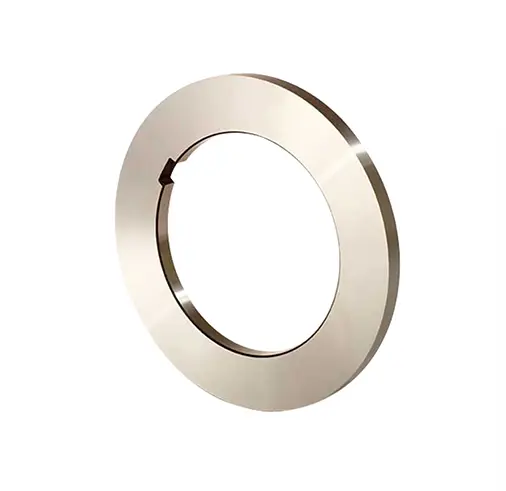
ERW tube rollers are core tooling components for high-frequency ERW tube production lines. Through continuous extrusion and bending by multiple sets of ERW tube rollers, flat steel strips are gradually rolled into tubular blanks. The blanks then go through high-frequency welding, sizing and straightening processes to produce finished steel pipes. Many personnel new to ERW tube production do not understand how the rollers realize continuous deformation and forming of steel strips, which may lead to forming defects such as blank wrinkling, edge misalignment and bulging. This article explains the working principle of ERW tube rollers, segmented forming procedures and supporting functions of rollers to help understand the complete process logic of ERW tube forming.
1. Basic Working Principle of ERW Tube Roller
ERW tube forming adopts the idea of progressive bending forming. A full set of rollers are arranged sequentially according to working procedures, including rough forming section, finish forming section and guiding section. Driven by the traction force of the unit, flat steel strips are conveyed forward at a constant speed and pass through each group of rollers in sequence. Each set of rollers only completes part of the bending deformation and gradually changes the cross-section shape of the steel strip, instead of bending the steel strip into a round pipe in one step.
The roller surface is machined with grooves matching the cross-section of the pipe. Upper and lower rollers apply radial pressure to the steel strip, while side rollers provide lateral restraint. Under the extrusion of rollers, plastic bending occurs on the transverse cross-section of the steel strip. The middle part of the plate has small deformation, and both side edges bend upward gradually. As the steel strip moves forward continuously, its cross-section changes from flat plate to arc shape, U-shape, and finally closes into an open round tube blank. The two edges of the steel strip align to form a V-shaped joint, preparing for subsequent high-frequency welding.
The whole forming process belongs to cold plastic deformation. The steel strip only changes its cross-section profile without altering its thickness. The deformation amount of each set of rollers is allocated to control the bending degree of each section, avoiding excessive deformation in a single pass that causes surface scratching, edge wrinkling and uneven springback of the steel strip.
2. Respective Functions of ERW Tube Rollers in Segmented Processes
Rough forming rollers Rough forming rollers undertake the main bending task. After entering the rough forming unit, flat steel strips complete large-radius bending step by step. The rollers fix the middle area of the steel strip and bend both plate edges upward to preliminarily bend the flat plate into an arc shape. This stage has relatively large deformation, mainly establishing the basic contour and controlling the overall trend of the steel strip to reduce deviation. The groove radian of rough forming rollers increases gradually to ensure smooth transition of deformation.
Finish forming rollers After rough forming, the steel strip enters finish forming rollers. At this stage, the arc blank is further gathered, the roundness of the tube blank is adjusted, and the two edges of the steel strip are precisely aligned to form a uniform and stable V-shaped joint. Finish forming rollers impose stricter control on tube blank roundness and joint clearance. Excessive joint clearance or height misalignment of edges will directly affect high-frequency welding quality and cause defects such as incomplete welding, missed welding and weld beads.
Guide rollers and squeeze rollers Guide rollers restrict the left and right position of the tube blank to prevent lateral deviation during forming and ensure the plate edges smoothly enter the welding zone. Squeeze rollers are key rollers at the rear end of forming. Before welding, they apply squeezing force to the open tube blank so that the two edges of the steel strip fit closely and guarantee fusion after heating by high-frequency induction.
3. Key Control Points of ERW Tube Roller Forming
The profile curve of the roller is critical to forming quality. The curve design needs to match the pipe specification and reasonably distribute the deformation amount of each pass. Improper deformation distribution will generate residual stress on the steel strip, which may cause pipe warping and roundness deviation later.
The gap adjustment of rollers is very important. The gap between upper and lower rollers shall match the thickness of the steel strip. Too small a gap will squeeze and scratch the pipe surface; too large a gap leads to insufficient forming of the steel strip, poor roundness of tube blank and failure of plate edge closing. When producing ERW tubes of different diameters and wall thicknesses, rollers of corresponding specifications need to be replaced or the center distance of rollers adjusted.
The springback of steel during production cannot be ignored. Steel tends to spring back after bending. The groove of rollers needs to reserve corresponding compensation to offset shape changes caused by springback and ensure the dimensional compliance of formed tube blanks.
4. Common Defects and Causes of ERW Tube Rollers
Wrinkling at tube blank edges is mostly caused by excessive deformation in a single pass and accumulation of excess material on plate edges. Tube blank deviation generally results from asymmetric left and right roller gaps or inherent camber of raw steel strip. Surface scratches are mainly caused by roller surface wear and burrs on the roller surface. Height misalignment of joints relates to roller centering accuracy and improper adjustment of guide rollers. Long-term operation of rollers will bring wear and change the profile contour, reducing forming stability, so regular maintenance and grinding are required.
5. Brief Description of ERW Tube Roller Material and Service Environment
ERW tube rollers bear continuous friction and extrusion from steel strips. They are generally made of alloy tool steel and treated by heat treatment to improve surface hardness and reduce wear rate. During operation, rollers are used together with cooling and lubricating media to take away heat generated by friction, reduce roller surface wear and lower the probability of scratches on steel strips.
Summary
ERW tube rollers work on the principle of multi-pass progressive cold bending. Driven by the traction of the unit, steel strips are continuously conveyed. Each group of rollers applies radial and lateral pressure to the steel strip, bending and gathering the flat steel strip step by step to form an open round tube blank. Rough forming completes basic bending, finish forming adjusts roundness and joint, while guide rollers and squeeze rollers guarantee tube blank centering and edge fitting before welding. Reasonable distribution of deformation in each pass and precise adjustment of roller gap and centering during production can reduce forming defects such as wrinkling, edge misalignment and scratches and stabilize the forming quality of ERW tubes.

Contact Person: Ms Liu
Tel: +86-17736028207
Email: mirror.liu@hongqiroll.com
Web: www.hongqiroll.com
Address: Chenglang Section, Jicun Town
Yuanshi County, Shijiazhuang City, Hebei, China, 051131
Copyright © 2025 Shijiazhuang Hongqi Roll Manufacturing Co., Ltd All rights reserved
Friendship Link Check Valve